When people hear the word trauma, they often picture something big and obvious. A serious accident. A natural disaster. An act of violence. But trauma does not always come from a single dramatic moment. Sometimes it is quiet. Sometimes it happened so long ago that you barely think about it. Sometimes you are not even sure it counts.
That does not mean it did not matter.
Repressed trauma is trauma that your mind tucked away because fully feeling it at the time was too overwhelming. Your brain did what it needed to do to help you survive. The problem is that just because something is pushed out of awareness does not mean it disappears. Your body remembers. Your nervous system remembers. And it often shows up in ways that feel confusing or hard to explain.
What Is Repressed Trauma
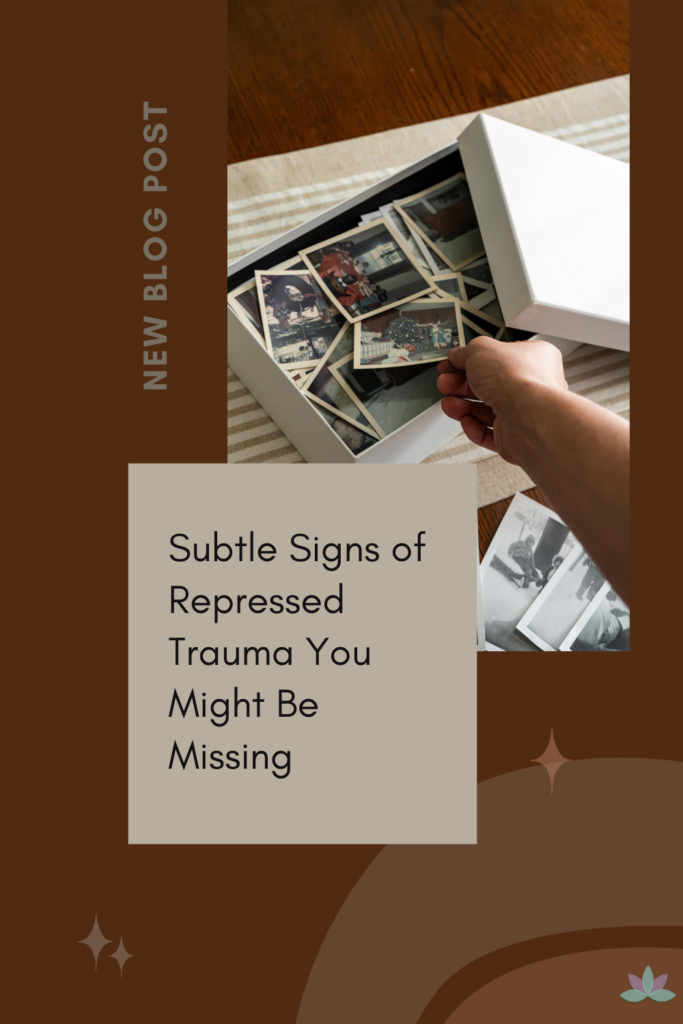
Repressed trauma refers to painful experiences that are stored outside of conscious awareness. This usually happens when a situation felt unsafe, overwhelming, or emotionally impossible to process in the moment.
Even if you do not remember the details, your nervous system may still react as if the threat is present. That is why repressed trauma can influence emotions, relationships, behavior, and physical health without a clear cause.
Overreacting or Shutting Down Without Knowing Why
Have you ever had a reaction that felt way bigger than the situation? Or the opposite, where you completely shut down and feel nothing at all?
This can happen when your body senses a threat that your logical brain does not recognize. Your nervous system may be responding to an old experience, even if your conscious mind is confused by the reaction. It can feel embarrassing or frustrating, especially when you cannot explain it.
Feeling Disconnected From Your Emotions
Some people experience repressed trauma as emotional numbness. You might struggle to name your feelings or feel detached from them altogether. You may default to saying you are fine even when something feels off.
This disconnection is not a flaw. It was protective at one point. Over time, though, it can make it harder to feel fully present in your life or emotionally connected to others.
Ongoing Anxiety Without a Clear Cause
If you feel anxious most of the time but cannot pinpoint why, your nervous system may still be stuck in survival mode. It can feel like you are always waiting for something bad to happen, even when things look okay on the outside.
This kind of anxiety often does not come with a clear story. It is your body responding to cues that remind it, unconsciously, of past danger.
People Pleasing and Fear of Conflict
Constantly anticipating other people’s needs, avoiding conflict, or feeling responsible for keeping everyone happy can be linked to repressed trauma.
For many people, people pleasing started as a way to stay safe. If upsetting someone once led to emotional or physical consequences, your nervous system learned that being agreeable was protection. Over time, this can turn into a pattern that feels hard to break.
Physical Tension and Stress in the Body
Trauma does not only live in the mind. It lives in the body.
Chronic tension, jaw clenching, stomach issues, headaches, or always feeling on edge can be signs that your body is still holding onto something. You might feel mentally calm, but your body stays braced, like it is preparing for impact.
Avoiding Certain People, Places, or Topics
Avoidance is one of the most common signs of trauma. You might feel uncomfortable around certain people or shut down when specific topics come up without knowing why.
Your body may be responding to a buried memory or emotional association, even if you cannot consciously recall it. This avoidance is not random. It is your nervous system trying to protect you.
Feeling Like Something Is Off but You Cannot Name It
This one is hard to explain, but many people recognize it instantly. You might feel disconnected from yourself or your life, like you are going through the motions but not fully present.
You may notice patterns you do not understand or struggle to feel safe and settled, even when things are stable. This persistent sense of unease can be a sign that something beneath the surface still needs care.
Healing Repressed Trauma Starts With Awareness
Repressed trauma does not mean something is wrong with you. It means your mind adapted in the best way it knew how.
Healing does not require forcing memories to come back. It starts with gently noticing your reactions, your patterns, and how your body responds to stress. With support, it is possible to feel safer in your body and more connected to yourself again.
If any of this feels familiar and you are curious to learn more about how your experiences may be shaping you, you can explore further here:
https://quiz.tryinteract.com/#/688fcddc4cc7d9498c775a7b?method=iframe
You do not have to have all the answers to take the next step. Awareness is enough to begin.

Hi, I’m Angie. I work with people who are trying to hold it all together while quietly wondering why life feels so overwhelming. Maybe you’re stepping into a new chapter—college, a job, a relationship—and it’s not going the way you thought it would. Maybe you’re tired of overthinking, people-pleasing, or feeling like you’ve lost track of who you are. I get it, and you don’t have to figure it out alone.
In therapy, I help you slow down, untangle the noise, and start feeling like yourself again. Together we’ll build confidence, set real boundaries, and find ways to handle life without so much pressure or self-doubt. My goal isn’t to “fix” you—it’s to remind you that you already have the strength and clarity you need.
When I’m not in session, you can usually find me sipping a matcha latte, spending time with my dog, or enjoying the calm of fall weather.
If you’re ready to feel grounded, confident, and back in control of your own story, I’d love to meet you.