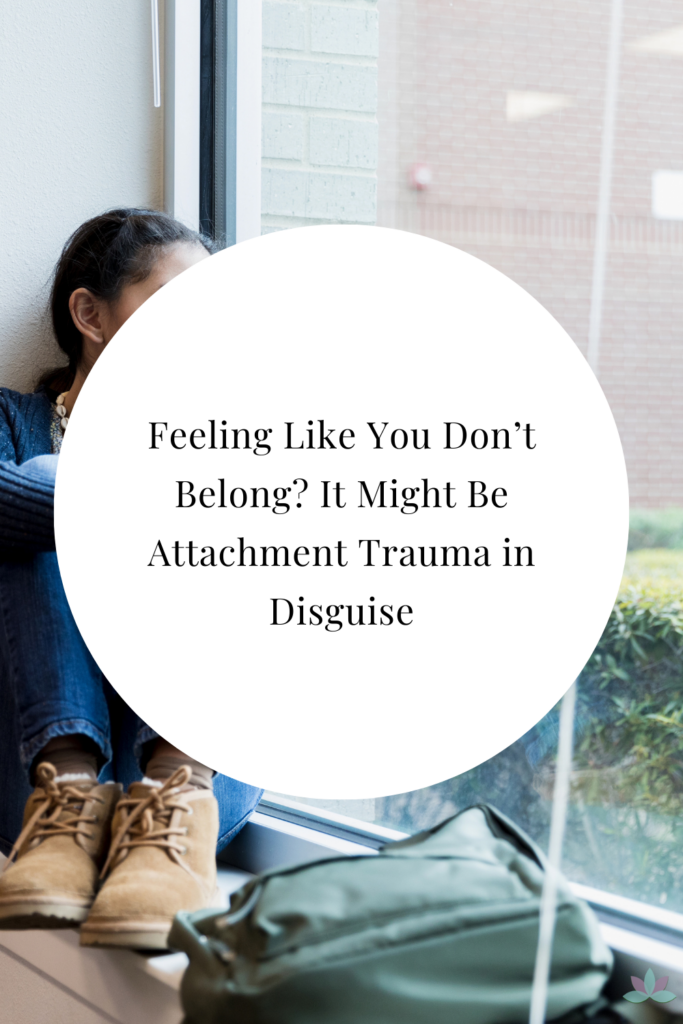
There’s a particular kind of ache that comes from feeling like you’re on the outside looking in. Maybe you’ve never quite felt like part of the group—even when surrounded by friends. Maybe you walk into a room and immediately wonder if everyone secretly wishes you weren’t there. Maybe you grew up in a family where no one really got you, and that sense of misfit-ness never went away.
This quiet sense of non-belonging—that feeling of being emotionally out of place—often gets brushed off as shyness, introversion, or just “being different.” But for many people, it’s actually something deeper. Something old. Something rooted in attachment trauma.
What Is Attachment Trauma, Really?
Attachment trauma happens when the people we were supposed to rely on for safety, connection, and care—typically our early caregivers—couldn’t meet those needs. Maybe they were emotionally unavailable, unpredictable, overly critical, or even absent altogether. Sometimes they were physically present but emotionally distant.
When a child doesn’t get consistent emotional attunement and acceptance, their nervous system learns to treat relationships as unsafe or unpredictable. Over time, that turns into deep-seated beliefs like:
I don’t fit in
I’m too much (or not enough)
If people really knew me, they’d leave
It’s not just about what happened—it’s about what didn’t happen: not being seen, understood, or welcomed for who you are.
Why It Feels Like You Don’t Belong (Even If You “Should”)
As adults, this early wiring can show up in surprising ways. You might be the person who reads every social interaction like a crime scene, searching for evidence that you don’t belong. You might avoid getting close to people because deep down, you don’t trust that you’re wanted.
And the most frustrating part? Even when you are included, part of you still feels like a fraud. Like you’re faking your way through connection, always waiting to be exposed and rejected.
This is classic attachment trauma in disguise. The wound isn’t just about loneliness—it’s about carrying a deep, often invisible belief that you’re fundamentally unlovable or unworthy of belonging.
The Body Keeps the Score (And So Does the Nervous System)
Non-belonging isn’t just a mental script—it’s physical. Your nervous system learned early on that connection could be dangerous or unreliable, so it adapted. Maybe you freeze when you walk into a new group setting. Maybe your heart races during small talk. Maybe you shut down emotionally when someone gets too close.
These aren’t personality quirks. They’re survival strategies.
Healing the Non-Belonging Wound
Healing attachment trauma isn’t about “fixing” yourself. It’s about gently challenging those old messages your nervous system still believes. It often means grieving the connections you didn’t get, while learning how to build safer, more secure ones now.
Therapy can help you tune into the parts of you that feel exiled or hidden. Over time, with consistent, compassionate connection, those parts begin to relax. You start to feel more at home—not just with others, but with yourself.
You may always have a trace of that outsider feeling. But it doesn’t have to define you. Understanding the roots of your non-belonging doesn’t erase the pain—but it can give it context, language, and most importantly, a path forward.
Because here’s the thing: you were never too much. You were never not enough. You just learned to adapt in a world that didn’t always make space for you. And that is something you can unlearn.

Our team of compassionate therapists is here to help you find the support you need. We believe in a holistic approach, treating your mind, body, and spirit. With a blend of traditional and alternative therapies, we tailor your experience to meet your unique needs. At Blossom, we create a non-judgmental space where you can be your authentic self. Our goal is to empower you, amplify your strengths, and help you create lasting change. Together, we’ll navigate life’s challenges and help you bloom, grow, blossom! You deserve to become the best version of you.