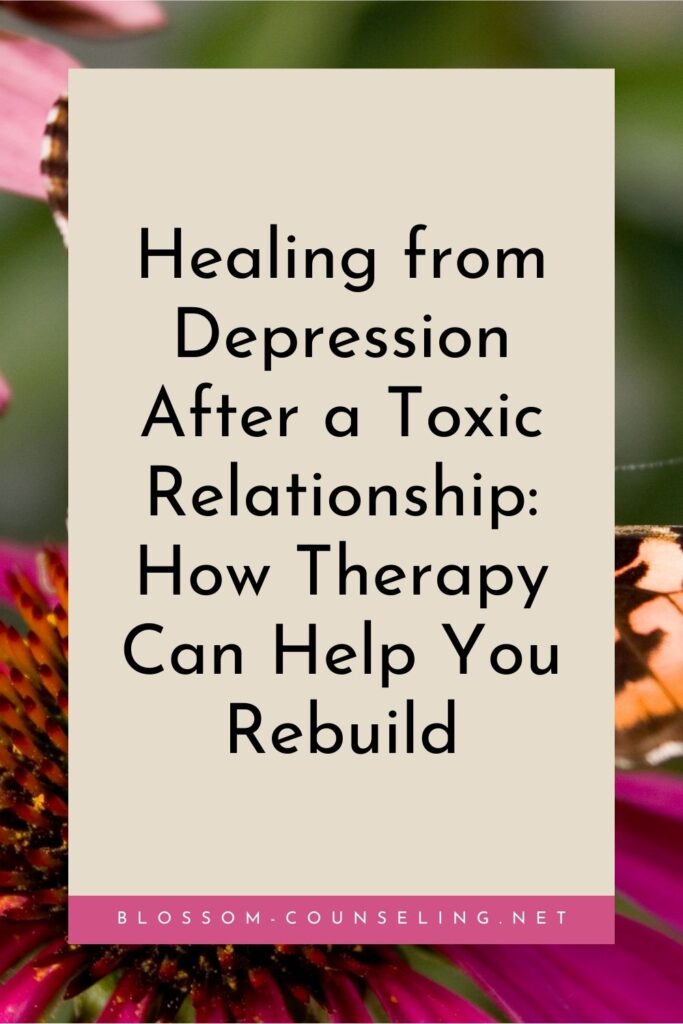
It’s one thing to feel sad after a breakup. It’s another thing entirely to feel like your sense of self has been erased, your energy drained, and your trust shattered. That’s often the emotional aftermath of a toxic relationship. Whether it was a romantic partner, a family member, or even a close friend—being in a toxic dynamic can leave you with symptoms of depression that linger long after the relationship ends.
What’s tricky is that depression tied to toxic relationships doesn’t always show up the way people expect. It isn’t just crying on the bathroom floor (though yes, that can happen too). Sometimes it looks like numbness. Exhaustion. A complete loss of interest in things you used to care about. Other times, it feels like waking up every day in a fog of self-doubt, replaying conversations in your head, and wondering if it was really that bad.
If this sounds familiar, you’re not alone—and you’re not being dramatic. Research has shown that chronic emotional invalidation, gaslighting, manipulation, or control in relationships can lead to significant mental health consequences, including depressive symptoms. Therapy can be a powerful tool in helping you recover, reconnect with yourself, and reclaim your voice.
Why Depression from Toxic Relationships Feels So Heavy
Toxic relationships often chip away at your sense of worth over time. You may have been told that your feelings were “too much,” that you were the problem, or that your needs were inconvenient. You might’ve had to walk on eggshells to avoid conflict or learned to suppress your emotions just to keep the peace.
That kind of emotional suppression doesn’t just disappear when the relationship ends. It builds up—and often turns inward. You might start believing the things you were told: that you’re difficult, unlovable, broken, or “too sensitive.” Depression becomes the aftershock of prolonged emotional stress, and it can show up in sneaky, insidious ways:
- Low energy and motivation
- Difficulty making decisions
- Feeling worthless or ashamed
- Trouble sleeping (or sleeping way too much)
- Isolating from friends or activities
- A constant internal narrative of self-blame
These symptoms aren’t just sadness—they’re your body and brain responding to chronic emotional harm.
How Therapy Helps You Heal
Therapy isn’t just about venting (although that can be very satisfying). It’s about working with someone who can help you untangle the invisible threads of a relationship that left you feeling small, stuck, or unsure of who you are.
A good therapist helps you:
- Recognize the impact the relationship had on your mental health
- Challenge the negative beliefs you internalized about yourself
- Process your emotions safely without judgment
- Rebuild your self-esteem and trust in your own intuition
- Develop healthier boundaries moving forward
For many people, one of the most painful parts of leaving a toxic relationship is realizing how much of yourself you lost along the way. Therapy creates space for you to grieve not just the relationship, but the parts of you that were dismissed or silenced. And then, piece by piece, to begin healing and reconnecting with who you really are—underneath all the hurt.
The Path Isn’t Linear—But It Is Worth It
Recovery from depression caused by toxic relationships isn’t a straight line. You might have days where you feel strong and grounded, and others where the self-doubt creeps back in. That doesn’t mean you’re failing. It means you’re human—and you’re healing.
In therapy, you get to slow down and gently explore your story at your own pace. It’s not about blaming yourself for staying or leaving. It’s about understanding the impact, honoring the pain, and learning how to move forward without carrying the weight of someone else’s dysfunction on your back.
You’re allowed to outgrow relationships that hurt you. You’re allowed to be angry, sad, confused, and relieved all at once. And you’re absolutely allowed to get support while you figure it all out.
Depression after a toxic relationship isn’t a flaw in your character—it’s a signal that something in your world deeply hurt you. But it’s not the end of the story. Therapy can help you write the next chapter—one where you get to feel safe, empowered, and fully yourself again.
Our team of compassionate therapists is here to help you find the support you need. We believe in a holistic approach, treating your mind, body, and spirit. With a blend of traditional and alternative therapies, we tailor your experience to meet your unique needs. At Blossom, we create a non-judgmental space where you can be your authentic self. Our goal is to empower you, amplify your strengths, and help you create lasting change. Together, we’ll navigate life’s challenges and help you bloom, grow, blossom! You deserve to become the best version of you.