Cognitive Behavioral Therapy (CBT) is one of the most widely researched and practiced forms of therapy—and for good reason. It’s practical, solution-focused, and helps people examine the relationship between their thoughts, feelings, and behaviors. But while CBT has earned its reputation as a go-to tool for anxiety, depression, and more, many people from marginalized communities have found that the traditional model doesn’t always fit their lived experience.
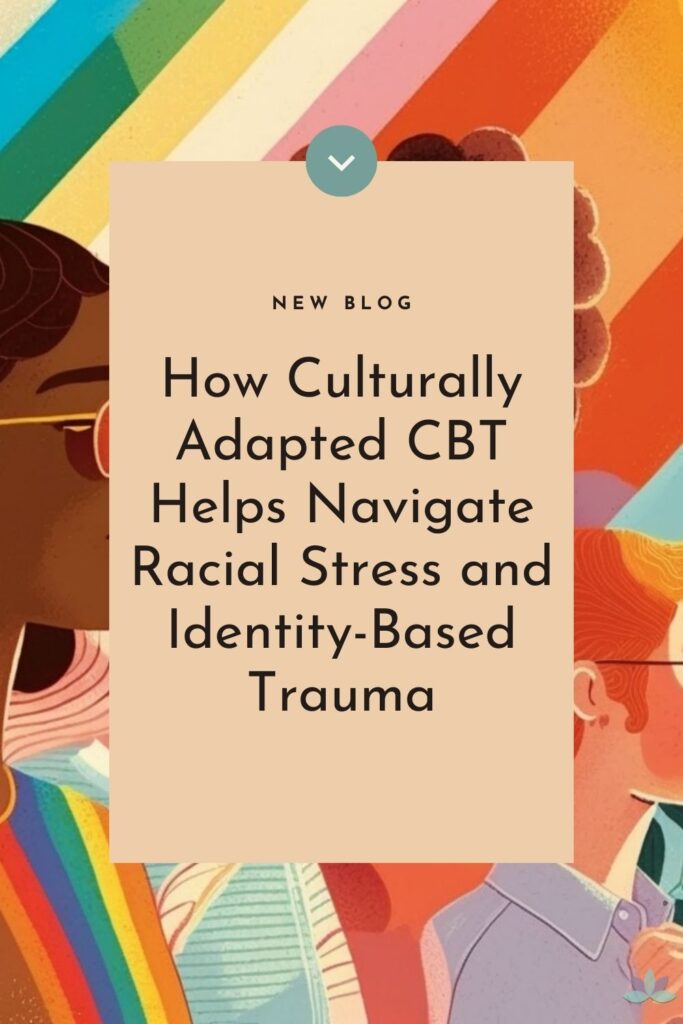
Enter culturally adapted CBT—a version of therapy that recognizes racial stress, disability-based trauma, and identity-based discrimination as not just side notes, but central to how a person moves through the world. For BIPOC individuals, LGBTQ+ folks, people with disabilities, and others who experience systemic oppression, therapy needs to do more than teach you to “reframe the thought.” It needs to validate why the thought exists in the first place.
What Is Racial Stress, and Why Does It Matter in Therapy?
Racial stress is the psychological and physiological toll that comes from experiencing racism—whether directly, indirectly, or systemically. This can include everything from microaggressions at work to the chronic fear triggered by police violence in the news.
Unlike typical stressors, racial stress is often invalidated, gaslit, or minimized by others. People might hear things like “Just don’t take it personally,” or “Are you sure that’s what they meant?”—which can deepen the impact and lead to internalized blame.
When therapy doesn’t name or address racial stress, it can unintentionally replicate the same erasure that clients experience outside the therapy room. Culturally adapted CBT takes a different approach.
How CBT Can Be Adapted for Racial Stress
At its core, CBT helps people identify unhelpful thought patterns and replace them with more accurate or empowering ones. But when your thoughts are shaped by a lifetime of racial trauma, discrimination, or marginalization, it’s not as simple as “challenge the negative thought.”
Culturally adapted CBT begins by recognizing that many of the thoughts people have—such as “I have to work twice as hard to be seen as competent” or “People are watching me because of how I look”—are not irrational. They’re protective. They come from experience.
Rather than labeling these thoughts as “distorted,” therapists working with culturally informed CBT frameworks create space for clients to explore:
- Where did this belief come from?
- What systems reinforced it?
- How has it helped me survive—and how is it limiting me now?
This version of CBT acknowledges that the context matters. It blends traditional CBT tools (like thought logs and behavioral experiments) with cultural humility, identity exploration, and validation of lived experience.
What Might This Look Like in a Session?
Imagine a client who avoids speaking up in meetings because they fear being seen as “too aggressive”—a fear rooted in the stereotype of the “angry Black woman.” Traditional CBT might encourage them to examine the evidence behind that belief or challenge the assumption that speaking up equals aggression.
But culturally adapted CBT takes it further:
- It validates the historical and social context behind that fear.
- It explores the client’s previous experiences where this stereotype may have played out.
- It empowers the client to decide how they want to navigate this space—whether that’s setting boundaries, building confidence in code-switching, or challenging the system altogether.
The goal isn’t to erase the thought. The goal is to build awareness, autonomy, and resilience in the face of a system that wasn’t built with you in mind.
Why Representation in Therapy Matters
Therapists who are trained in culturally adapted CBT—or who share aspects of your identity—may be better equipped to understand the nuance of racial stress without needing constant explanation. But even for therapists who don’t share your background, a commitment to cultural humility, continued learning, and anti-racist practice can make all the difference.
When therapy reflects your reality, it becomes more than a coping space—it becomes a space for healing, empowerment, and resistance.
Culturally adapted CBT isn’t a one-size-fits-all fix. It’s an evolving, intentional effort to make sure therapy meets people where they are—including in the reality of racialized and marginalized experiences. Because healing should never ask you to erase who you are to feel better. It should help you feel more like yourself—fully, unapologetically, and with the tools to thrive.

Our team of compassionate therapists is here to help you find the support you need. We believe in a holistic approach, treating your mind, body, and spirit. With a blend of traditional and alternative therapies, we tailor your experience to meet your unique needs. At Blossom, we create a non-judgmental space where you can be your authentic self. Our goal is to empower you, amplify your strengths, and help you create lasting change. Together, we’ll navigate life’s challenges and help you bloom, grow, blossom! You deserve to become the best version of you.