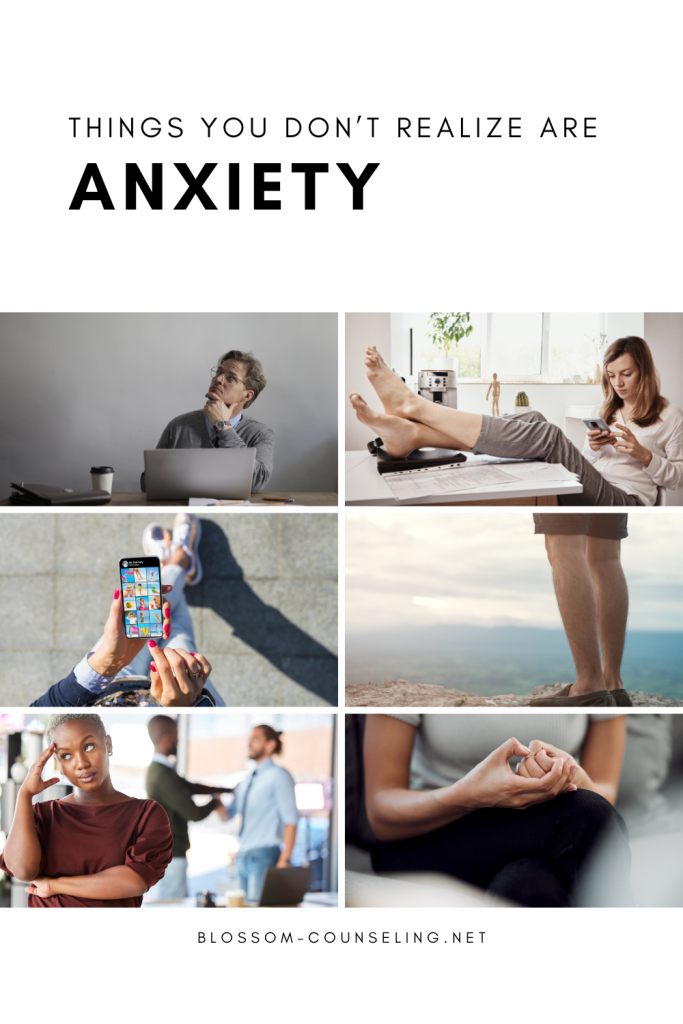
Anxiety is sneaky. It often doesn’t march in with flashing warning signs—instead, it simmers quietly under the surface, showing up as overthinking, restlessness, irritability, or that exhausting loop of “what ifs” that won’t stop playing in your head.
One of the core drivers behind anxiety isn’t just fear or stress—it’s uncertainty. Not knowing what’s coming, how something will play out, or whether you’ll be okay in the face of change? That’s anxiety’s favorite playground. And for people who live with chronic uncertainty—whether due to life circumstances, trauma, or a fast-changing world—that can mean living in a near-constant state of emotional tension.
Why Uncertainty Feels So Unsettling
Your brain is wired for safety. It likes patterns, predictability, and control. When something is uncertain, your nervous system doesn’t know whether it should gear up for danger or relax—and that ambiguity can trigger the anxiety response.
Think about it: uncertainty is the gap between a question and its answer. Will I get the job? Will my partner leave? Will I be okay? That in-between space where the outcome is unknown can feel unbearable—so your brain starts scanning for threats, rehearsing worst-case scenarios, and trying to “solve” the uncertainty through overthinking or control-seeking behaviors.
Even if nothing bad is actually happening, your brain may act as if it might, just in case. That’s how anxiety convinces us that the worry is protective—even though, in the long run, it just keeps us stuck in a loop.
The Cost of Chronic Uncertainty
Living with occasional uncertainty is just part of being human. But chronic uncertainty—where you rarely feel settled or safe—can start to take a toll on both your mental and physical health. People living in high-stress environments, unstable relationships, or with financial and health unpredictability often find themselves constantly bracing for impact. And that kind of long-term vigilance can be exhausting.
Symptoms of anxiety tied to chronic uncertainty can include:
- Feeling “on edge” even during calm moments
- Trouble relaxing or being present
- Racing thoughts or mental fatigue
- Avoiding decisions for fear of making the wrong one
- Overplanning or needing constant reassurance
- Sleep issues or physical symptoms like stomach pain or muscle tension
Over time, the nervous system becomes so used to being activated that “calm” can actually feel foreign—or even unsafe. That’s part of why healing anxiety isn’t just about “thinking positive.” It’s about helping your body feel safe again, even when things are uncertain.
Why We Try to Control the Uncontrollable
When life feels unstable, our brains do what they do best: try to make sense of things. But here’s the twist—sometimes the more we try to control things that are fundamentally uncertain, the more anxious we become.
Micromanaging every detail. Seeking constant reassurance. Ruminating over every possible outcome. These are all attempts to cope with the discomfort of not knowing—but they rarely bring the peace we’re actually craving. Instead, they feed anxiety by reinforcing the idea that uncertainty is dangerous.
Learning to tolerate uncertainty doesn’t mean you have to love it—but it does mean building trust in your own ability to cope, even when you can’t predict the future.
Rewiring the Anxiety-Uncertainty Loop
The connection between anxiety and uncertainty is strong, but not unbreakable. Therapy can help explore the roots of why uncertainty feels so threatening, while offering tools to respond more flexibly and calmly. And the good news? Your brain is capable of rewiring.
Strategies like mindfulness, grounding techniques, nervous system regulation, and cognitive reframing help shift how you respond to the unknown. Over time, you build a kind of psychological flexibility—the ability to say, “I don’t know what will happen, but I can handle it.”
And in a world that’s always changing, that kind of inner stability might be the most powerful tool you can have.

Our team of compassionate therapists is here to help you find the support you need. We believe in a holistic approach, treating your mind, body, and spirit. With a blend of traditional and alternative therapies, we tailor your experience to meet your unique needs. At Blossom, we create a non-judgmental space where you can be your authentic self. Our goal is to empower you, amplify your strengths, and help you create lasting change. Together, we’ll navigate life’s challenges and help you bloom, grow, blossom! You deserve to become the best version of you.